
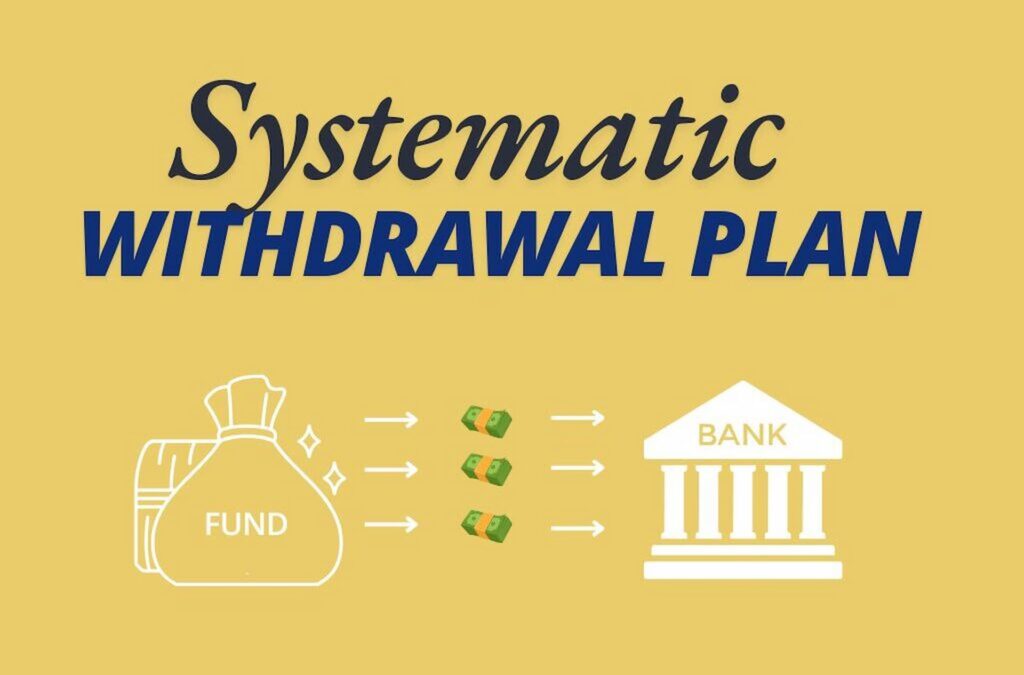
Introduction to SWP
Systematic Withdrawal Plans, simply referred to as SWP, is an investment scheme that enables you to make monthly withdrawals of a fixed amount of money from your mutual fund investment. Whereas SIPs help you in accumulating wealth through periodic investments, SWPs assist you in managing your income through periodic withdrawals. SWP is also perfect where the investor desires a sustainable stream of cash flow in their investments, particularly in retirement or at a time when they have achieved a particular goal in life. It comes with flexibility and control because investors can opt to withdraw a certain amount, and they too can stipulate how frequent to get the payout,t whether it is monthly, quarterly or annually.
What is SWP and How Does it Work?
The Systematic Withdrawal Plans is just the opposite of SIP. To do that,t you do not make regular ongoing investments, but rather get a certain amount of funds withdrawn regularly out of your mutual fund investment. The amount selected is automatically deposited into your bank accounts on the days you provide. The rest of the investment is sustained in the investment until you start your withdrawal, hence you have time to make returns. To illustrate this by taking an example, suppose you have 10,00,000 lakhs (one million rupees) in a mutual fund and you choose an SWP rate of 10,000 a month, then this would be put into your bank account each month, and the rest of the funds would continue to invest.
Depending on the Net Asset Value (NAV) of the fund, the unit amount is redeemed by the fund house at the time of withdrawal in the number of units. With a high NA, V, a lower number of units are redeemed. When the NAV is low, additional units are redeemed in order to satisfy the payout requirement. The free and graceful procedure renders SWP a favorite tool among retirees wishing to earn a monthly pay without stepping out of the market entirely.
Benefits of Systematic Withdrawal Plans

One of the greatest benefits of SWP is that it enables people to have a steady and certain stream of income. This is why it is quite a good choice for individuals who require periodic payments to cover monthly household costs, medical issues, or lifestyle issues. In contrast to fixed deposits, SWPs will not lock up all your capital, and they have greater liquidity and are likely to give better returns.
The second important advantage of SWP is that your leftover investment will grow with the help of compounding. As you are taking out one part, the remaining investment continues in the mutual fund, thereby contributing to preserving the total amount of your corpus in the long run. This withdrawal and capital appreciation balance is what makes SWP a good tool in financial planning for retirement.
SWPs have great flexibility as well. You have the option to choose the amount you want to draw, the interval of the draw, and even halt or change the plan according to your monetary requirements. No one requires withdrawing the amount in full or stick to a certain pattern indefinitely. Besides, SWP is not a retirement plan only; it can also be utilized by any person who desires to follow the systematic use of their investment without cashing in the entire sum at the same time.
1. Regular Income Stream
SWP provides you with a stable cash flow (i.e., like a salary or pension). It is excellent to be used after retirement or to cover household financial needs.
2. Capital Continuity
Just a fraction of your investment is withdrawn. The remainder remains invested, and your funds are allowed to accumulate over time via compounding.
3. Tax Efficiency
The withdrawal in SWP is not taxed, but the part of the amount that constitutes capital gains is taxable. This is why SWPs will be more tax-efficient than interest or FD. Equity mutual funds help you save long-term capital gains tax up to 1 lakh per annum.
4. Flexibility and Control
It is possible to select the amount of the SWP, the frequency (monthly, quarterly, etc.), and it is possible to stop the plan or change it anytime without penalties.
5. Better Than Lump-Sum Withdrawals
As opposed to the whole redemption of your investment, SWP enables you to get your money in small regular instalments, and the rest continues to earn.
Tax Efficiency of SWP
Tax efficiency is another benefit that makes Systematic Withdrawal Plans appealing as opposed to conventional income, such as interest earned on a savings account or a fixed deposit. The redemption of a fund unit is looked upon as the withdrawal in SWPs. This is to the effect that your withdrawal will only be taxed on capital gains. Assuming that you have invested in the mutual fund over a year prior to the SWP initiation, the rules of taxation of long-term capital gains taxes are applicable, and this rate is less than the normal income tax.
In case of equity mutual funds, long-term capital gains that include up to 1 lakh per annum are not to be taxed; more than that, it has to be taxed at 10%. With the long-term capital gains 20% tax is levied on debt mutual funds, and a benefit of indexation is awarded. This leaves SWP as an excellent way to get post-retirement income since it provides investors with the option of taking out money on a regular basis with low outflow of taxes, let alone with prudent planning and timing of investment.
Is SWP Taxable?
Yes, SWP withdrawals may attract capital gains tax, depending on the type of mutual fund and the holding period.
- For equity mutual funds, if held for more than one year, long-term capital gains are tax-free up to ₹1 lakh per year. Beyond that, profits are taxed at 10%.
- For debt mutual funds, long-term gains are taxed at 20% with indexation (if held for over 3 years), and short-term gains are added to your income and taxed as per your tax slab.
Who Should Consider SWP?
The Systematic Withdrawal Plans best fits the people who want to have a stable and consistent flow of income from their investments. The main beneficiaries of this plan are retired persons because they could exchange a regular salary for a fixed monthly payout. It will also be helpful when an individual gets a lump sum amount, either through inheritance, the sale of property, or retirement benefits and intends to use some of it rather than exhausting it quickly by spending it.
SWPs may also help in generating cash flow towards a certain financial aspect, like child college education, EMIs, or even a secondary source of income and at the same time building up on your principal investment. When the cash flows of based businesses are not certain, business owners or freelancers with irregular incomes can use SWPs in managing monthly expenses.
Who Should Use SWP?

- Retirees seeking a pension-like regular income.
- Freelancers and business owners with irregular cash flow.
- Parents need a monthly income for education or household costs.
- Investors who have received a lump sum (e.g., from inheritance or the sale of property) and want to utilize it steadily.
SWP is also helpful if you’re aiming for financial independence, as it can serve as a bridge between active work life and retirement.
Difference Between SWP and SIP
| Feature | SIP (Systematic Investment Plan) | SWP (Systematic Withdrawal Plan) |
| Purpose | To build wealth | To generate income |
| Flow Direction | Money goes into the fund | Money comes out of the fund |
| Suitable For | Young investors, savers | Retirees, income seekers |
| Frequency | Monthly/weekly contributions | Monthly/quarterly withdrawals |
| Taxation | Tax on capital gains when redeemed | Tax only on gains per withdrawal |
SWP Strategy and Planning
SWP planning should be done carefully. You have to know how much money you want to receive on a monthly basis, how long your capital can serve you and what kind of returns you can receive out of your remaining investment. It is also prudent to initiate your SWP by using those funds that offer a stable track record and with which you are comfortable. Better growth can be provided by equity funds, but with volatility. It is safer and more stable in terms of regular income as compared to debt funds, more so for conservative investors.
An equity-debt portfolio with a balance between equity and debt funds can provide capital gain and provide stable drawdowns. You should periodically reconsider your plan and adjust it in case your financial requirements change or the market situation changes greatly. The advice of a financial counselor can assist you in creating an SWP strategy that would fit your current life stage, the cost of expenses, and your risk tolerance.
Final Thoughts
The Systematic Withdrawal Plan helps you to receive income in a flexible, convenient and tax-efficient manner from your mutual fund investments. Other than early retirement, emergency income, and effective lump-sum management, SWPs can be tailored to fit your retirement life and needs. SWPs, unlike the traditional fixed-income instruments, have an additional advantage of market growth potential in addition to the comfort of consistent payments.
At Gullak by ClogTheBlog, we will seek to create awareness of the process of ensuring that your money works for you. SWPs are not only financial instruments, but they are lifestyle enablers, and this gives you an opportunity to enjoy your savings without burning them out. The correct plan allows you to make your investments to support your dreams and keep the future safe.
Pingback: Stocks & Equity Investment: Your Gateway to Long-Term Wealth Creation -
Pingback: Personal Loans: Your Instant Solution for Financial Needs -